
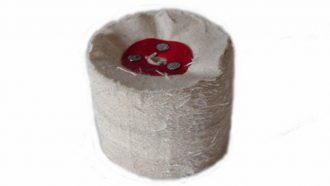
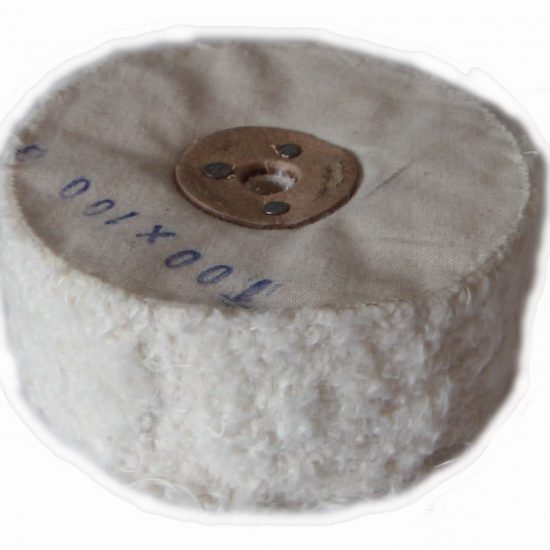
B-Quality Calico Polishing Wheel – 50mm, 2 Section is designed for controlled workshop polishing with bar compound. Its Firmer B-quality loose calico construction creates a more compliant working face than a tightly stitched wheel, allowing it to follow gentle contours while producing an even finish.
Polishing role and applications
Recommended role: Controlled polishing where a firmer loose wheel is preferred; commonly selected as an alternative to a white stitched mop.
The two-section format gives a broader working face than the single-section version while retaining access for small components. Loose calico wheels can be used on aluminium, brass, copper, stainless steel, mild steel, precious metals and suitable plastics when paired with a compound and process appropriate to the material. Always test heat-sensitive or delicate surfaces first.
Compound selection
- Light cutting or colour correction: use a compatible mild cutting compound where the material and desired finish allow.
- Colouring and final lustre: pair with a suitable finishing compound and use light, controlled pressure.
- Contamination control: never mix cutting and finishing compounds on the same wheel; label wheels by compound and material.
Specifications
- Wheel type: Loose leaf calico polishing wheel
- Diameter: 50mm (2″)
- Working face: 2 sections
- Construction: Firmer B-quality loose calico construction
- Supply: One polishing wheel
Choose a diameter your machine can safely accommodate, then match face width to the workpiece. Narrower wheels improve access; wider wheels improve coverage. Use a dedicated wheel for each compound and each metal group to prevent cross-contamination. Confirm the wheel centre, spindle or adaptor fit and the machine’s rated speed before use.
Machine compatibility
For use only on a compatible bench polisher, converted bench grinder or polishing machine fitted with the correct spindle, tapered adaptor or retaining system. Check available shaft length, guards, clearances, rotation and the manufacturer’s permitted wheel diameter and speed. Do not assume two wheels with the same diameter share the same centre fitting.
Using the wheel
- Inspect the wheel and mounting hardware, then secure the wheel correctly with the machine isolated.
- Run the wheel briefly without load and stand clear of the rotation plane.
- Charge the face sparingly with the selected compound; add small amounts as needed rather than overloading it.
- Present the work below the centreline where appropriate for the machine, using light pressure and continuous movement to control heat.
- Rake or dress the wheel when residue builds up, and stop if vibration, damage or excessive heat develops.
Safety
Wear suitable eye and face protection, respiratory protection where required, and close-fitting workshop clothing. Secure small components with an appropriate holding method. Keep loose hair, jewellery and gloves that may snag away from rotating machinery. Follow the wheel, compound and machine instructions at all times.













There are no reviews yet.