
POLISH UP • CENTRELESS AIRFLOW SYSTEM
200mm Airflow system — preparation to high lustre
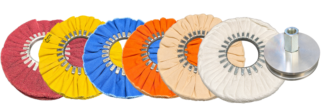
A maroon non-woven preparation wheel, five cloth polishing wheels including swansdown, and the AAFK-0014 flange/M14 adaptor kit give you a versatile foundation for restoring prepared metal and developing a brighter, more even finish. Choose the cutting wheel to suit the surface, refine the result and finish with natural calico.
What is included
- 1 × 200mm maroon non-woven centreless Airflow wheel — CANW-2000-CL: satin preparation, blending and preparation-line refinement.
- 1 × 200mm centreless swansdown Airflow high-finish wheel — CASD-2022-CL: final colouring and high lustre after cutting, refinement and calico finishing.
- 1 × 200mm yellow hard-treated centreless Airflow wheel — YANW-2012-CL: a firm cutting option for initial polishing of suitably prepared metal.
- 1 × 200mm blue coarse-treated centreless Airflow wheel — BANW-2012-CL: cutting and early refinement.
- 1 × 200mm orange medium-treated centreless Airflow wheel — OANW-2012-CL: intermediate refinement and preparation for finishing.
- 1 × 200mm natural calico centreless Airflow wheel — CANW-2012-CL: final finishing and colouring with an appropriate finishing compound.
- 1 × AAFK-0014 mounting kit: retaining flanges and M14 adaptor, reused between compatible wheels.
All six wheels are supplied without fitted centre plates. The swansdown wheel is the separate centreless CASD-2022-CL configuration. Its mounting compatibility must be physically verified before this kit is released. The non-woven wheel adds an abrasive preparation stage; swansdown adds a separate final colouring stage.
How the mounting system works
The flanges hold the selected wheel in place. The M14 adaptor clamps the flanges together and attaches the assembly to a compatible polishing machine. Use one wheel at a time and transfer the mounting assembly when changing stages. The AAFK-0014 kit has been physically checked by Polish Up with the four cutting-to-calico wheels and maroon non-woven wheel. Swansdown fitment is pending confirmation.
The mounting kit is included: you do not need to purchase a second AAFK-0014 to use these wheels. Machine compatibility must still be checked separately.
Preparation and high-finish benefits
The maroon abrasive non-woven wheel blends preparation lines and creates a more even satin grain on suitable metal. Use light, even pressure and a consistent direction. Its finish is approximately comparable with P320–P400 as a guide, not a certified grit rating. Normally use it without bar compound, and clean away abrasive residue before changing to cloth wheels. It does not replace sanding needed to remove deep defects.
After the surface has been cut, refined and finished with natural calico, the soft swansdown wheel provides a dedicated final colouring stage for high lustre. Pair it with an appropriate fine finishing compound with minimal cut, apply sparingly and use controlled pressure. It can improve clarity and reflectivity on properly prepared suitable metal, but cannot remove scratches left by earlier stages or guarantee a mirror finish.
Benefits for your metal polishing work
- A more controlled finish: separate cutting, refining and finishing wheels let you match the process to the metal and the surface condition.
- Brighter presentation: correct preparation and compound selection can reduce fine surface marks and improve clarity and reflectivity on suitable bare metal.
- Useful coverage: the 200mm diameter provides useful coverage on accessible surfaces when used on a machine approved for this wheel size.
- Heat management: the ventilated folds encourage airflow during polishing. Controlled pressure, movement and suitable speed remain essential because the workpiece can still overheat.
- Cleaner stage changes: dedicating each wheel to its compound and metal group helps keep coarse residue away from the finishing stage.
- Reusable mounting hardware: one flange/adaptor assembly serves the included wheels, with individual replacement wheels available separately.
- Restoration potential: suitable metal parts can often be refreshed rather than replaced, depending on their condition and remaining material.
A practical polishing sequence
- Prepare first. Clean the workpiece and remove coatings or deep scratches with suitable preparation methods. Buffing is not a substitute for the abrasive work needed to level deep defects.
- Blend and prepare. Use the maroon non-woven wheel where required to even preparation lines. Clean the workpiece before cloth polishing.
- Select your starting cut. Choose hard or coarse according to the metal, compound and condition. Every job does not need both cutting wheels.
- Refine. Clean the workpiece and move to the medium wheel with a compatible refining compound. Check that earlier marks have been removed before proceeding.
- Finish. Use the natural calico wheel and an appropriate finishing compound. Keep pressure controlled and the workpiece moving.
- Develop final lustre. After calico finishing, use the swansdown wheel with an appropriate fine colouring compound. Keep it dedicated to this compound and metal group.
- Inspect and care. Remove residue and inspect under good light. Bare steel can reoxidise and may need suitable protective care after polishing.
Suitable applications include compatible aluminium, brass, copper, stainless steel and mild steel, using metal-specific compounds and preparation. Test a small area first, especially on thin, plated, coated or heat-sensitive parts. The final result depends on the material, preparation, compound and technique; a mirror finish is not guaranteed.
Machine compatibility and safe use
Polish Up confirmed pairing: the Shumba 1500W variable-speed polisher, SHVP-1500 is specifically designed to work with this AAFK-0014 adaptor and 200mm wheel combination. Machine sold separately. Follow the instructions and speed limits for the complete wheel and mounting setup.
Use only a polishing machine whose manufacturer permits 200mm buffing wheels and this mounting arrangement. Confirm M14 thread compatibility, correct engagement, secure clamping, clearance and the permitted operating speed for every component. An M14 spindle alone does not establish compatibility. Do not assume an ordinary fixed-speed angle grinder is suitable.
Isolate the machine before fitting or changing wheels. Inspect wheels and hardware, follow the equipment instructions and stop if vibration, damage, excessive heat or abnormal noise occurs. Use suitable eye and face protection and any hearing or respiratory protection required by the task. Keep hair, loose clothing, jewellery and other snagging items clear of rotating machinery.
Choose compounds for your metal.
Polishing compounds, sanding abrasives and the polishing machine are sold separately. Dedicate each wheel to one compound and metal group and clean the workpiece between stages.


There are no reviews yet.