1500 Watt Workshop Polishing Kit for Alloy & Steel | Polish Up

Why a 1500 Watt Workshop Polishing Kit Is a Smart Choice for Alloy & Steel Finishing

If you regularly polish alloy, steel, stainless steel, ute trays, bullbars, truck parts, workshop components or restoration projects, having the right polishing setup can save time, improve results and make the job far more consistent.

The
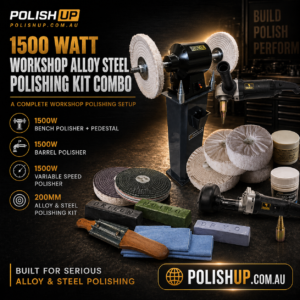
1500 Watt Workshop Alloy Steel Polishing Kit Combo
from Polish Up is designed for users who want a serious workshop polishing package, rather than a small single-purpose polishing tool.

This complete combo brings together powerful fixed polishing, handheld polishing flexibility and a full 200mm alloy and steel polishing kit, making it a strong option for anyone wanting to cut, polish, refine and finish metal surfaces in one workshop-ready setup.


What Makes This Workshop Polishing Kit Different?

Many polishing jobs require more than one tool. A bench polisher is excellent for controlled wheel polishing. A barrel polisher is useful for internal surfaces and shaped work. A variable speed polisher gives you flexibility for larger panels, curved areas and finishing work.

That is where the
1500 Watt Workshop Alloy Steel Polishing Kit Combo
stands out. It includes a 1500 watt bench polisher, 1500 watt barrel polisher, 1500 watt variable speed polisher/sander and a 200mm alloy and steel polishing kit, giving you a broad range of polishing options from one package.

Ideal For:

  • Alloy polishing
  • Steel and stainless steel polishing
  • Truck and ute tray polishing
  • Bullbar and metal accessory restoration
  • Workshop metal finishing
  • Restoration projects
  • High-gloss polishing work
  • Internal surface polishing

Built Around a Powerful 1500 Watt Bench Polisher

The bench polisher is the heart of many metal polishing workshops. With a stable setup, the operator can work the part against the polishing wheel with more control than many handheld methods allow.

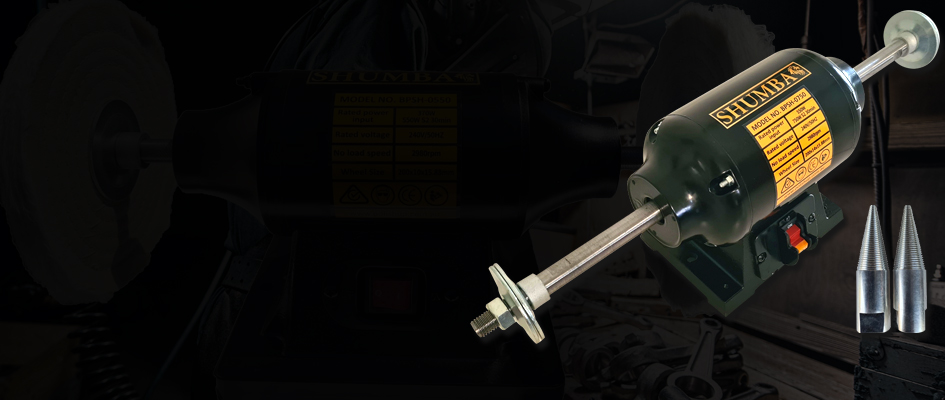
The bench polisher in this combo is rated at 1500 watts and is supplied with an 800mm pedestal stand, tapered spindle adapters and polishing wheels. This makes it a practical choice for users who want a dedicated polishing station in their shed, workshop or restoration area.

For anyone polishing alloy or steel regularly, a stronger bench polishing machine can help maintain wheel speed under load and provide a more confident polishing experience compared with lighter-duty options.

View the full package here:

1500 Watt Workshop Alloy Steel Polishing Kit Combo
.

The Advantage of Having Multiple Polishing Machines

Different polishing jobs often need different approaches. A flat alloy panel, a round stainless pipe, a bullbar corner, a wheel section and an internal surface may all require different machines, angles and polishing wheels.

This combo gives you several ways to approach the job:

  • Bench polisher: Ideal for fixed-position polishing, cutting and finishing with polishing wheels.
  • Barrel polisher: Useful for internal surfaces, curves, tubes and shaped metal areas.
  • Variable speed polisher: Helpful for larger surfaces, controlled finishing and flexible workshop polishing.

This flexibility makes the kit a strong choice for workshops, fabricators, restorers, truck owners, ute owners and anyone who wants to improve the finish of alloy and steel parts.

Understanding the Included Alloy & Steel Polishing Kit

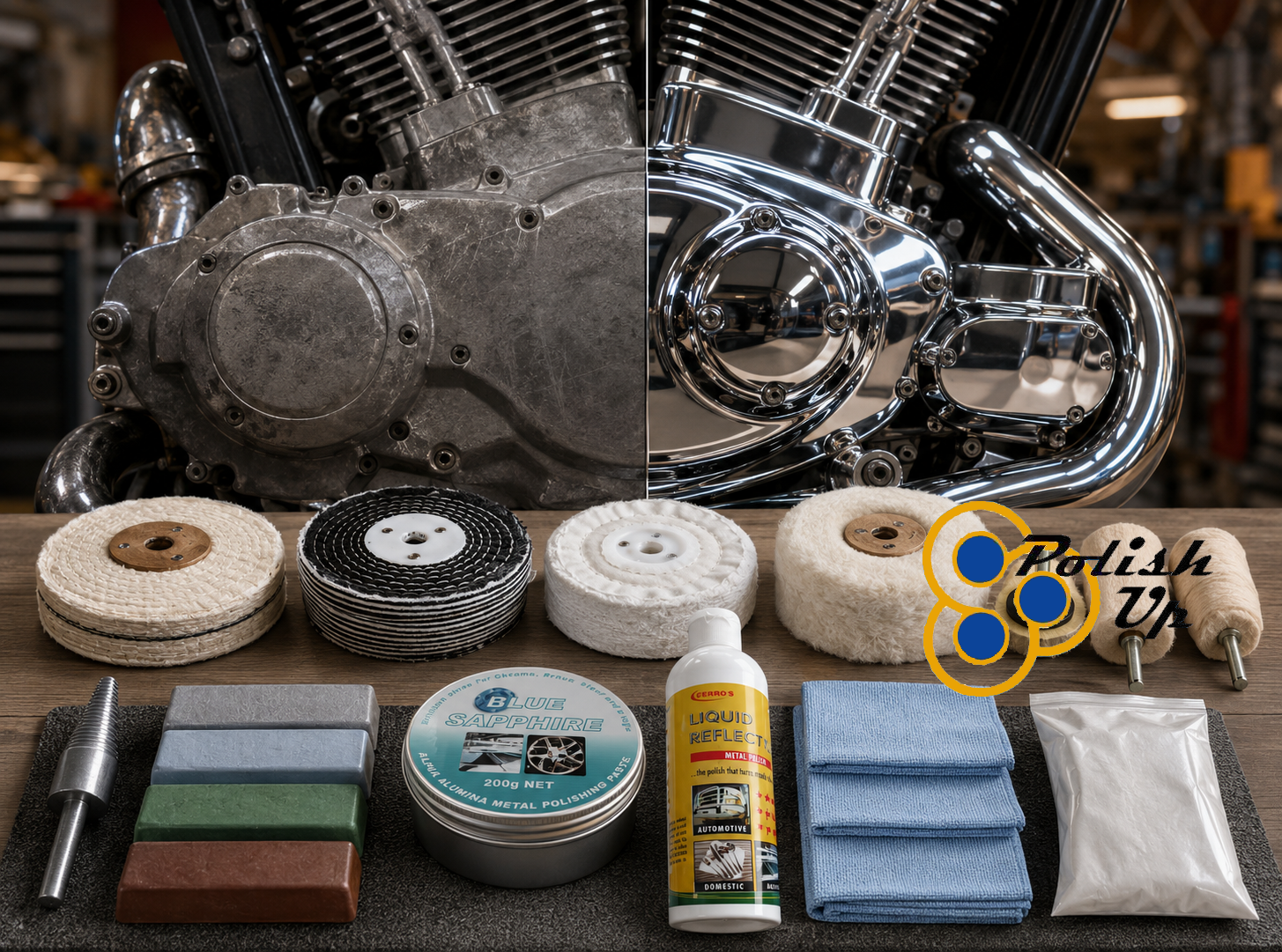
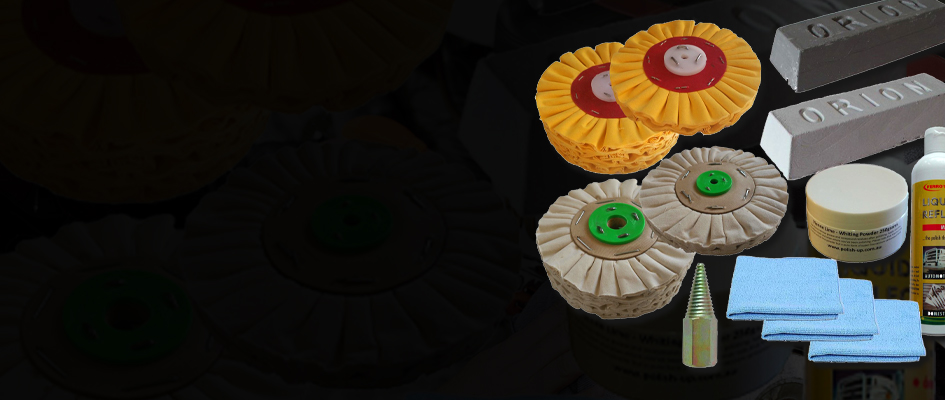
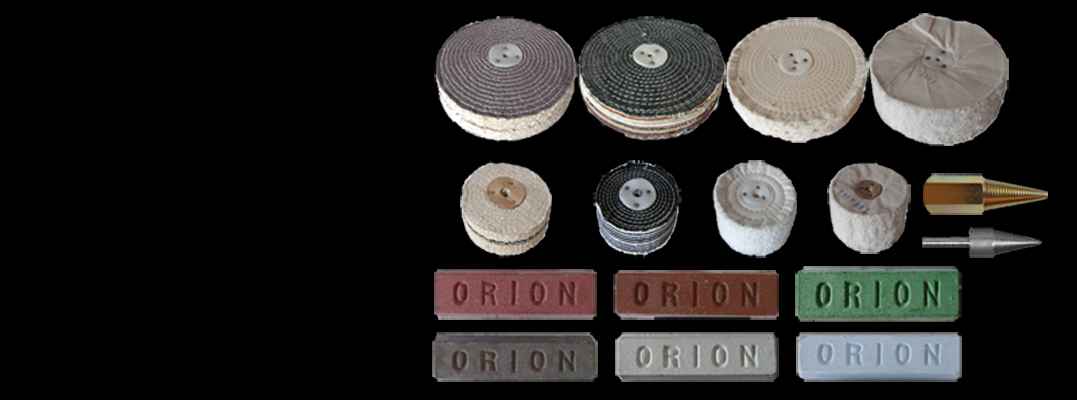
A good polishing machine is only part of the result. The polishing wheels and compounds matter just as much. The included 200mm polishing kit gives you a sequence of wheels and compounds that can help take metal from a dull or marked surface through to a brighter, cleaner and more refined finish.

Typical Polishing Process

  1. Cutting stage: Use a firmer wheel and cutting compound to remove oxidation, marks and dullness.
  2. Refining stage: Move to a colour stitch or white stitch wheel with a finishing compound.
  3. Final finishing stage: Use a softer finishing wheel for a brighter, cleaner and more reflective result.
  4. Clean-up stage: Wipe away residue and brighten the finish with suitable cloths and finishing products.

This staged process is important because great polishing is not usually achieved in one step. Cutting, refining and finishing each play a role in creating a better surface.

Why Alloy and Steel Need the Right Polishing Setup

Alloy and steel can both look outstanding when polished properly, but they do not always behave the same way. Alloy can often respond quickly to polishing, while steel and stainless steel may need a more controlled approach, correct compounds and suitable wheel selection.

Using the wrong wheel, the wrong compound or an underpowered machine can lead to slow results, excess heat, uneven finishes or frustration. A purpose-built polishing kit helps make the process more predictable.

That is why the
1500 Watt Workshop Alloy Steel Polishing Kit Combo
is a valuable option for serious polishing work. It gives you the machines, wheels and compounds needed to handle a wider range of metal polishing jobs.

Great for Truck, Ute, Workshop and Restoration Projects

Many Polish Up customers work with alloy, stainless and steel parts across vehicles, trailers, trucks, utes, fabrication jobs and workshop restoration projects. A proper polishing setup can help bring tired metal back to life.

This kit can be useful for polishing:

  • Alloy bullbars
  • Ute trays and toolboxes
  • Truck steps and metal trims
  • Stainless steel components
  • Fabricated steel parts
  • Workshop restoration pieces
  • Metal guards, brackets and accessories
  • Custom alloy and stainless work

Whether the job is maintenance polishing, restoration polishing or preparing parts for presentation, having a complete workshop polishing kit can make a noticeable difference.

A More Complete Setup Than Buying One Machine at a Time

Buying individual machines, wheels, compounds, adapters and accessories can quickly become confusing. It can also lead to mismatched parts or missing items when you are ready to start polishing.

A combo package simplifies the process. The
1500 Watt Workshop Alloy Steel Polishing Kit Combo
is designed as a complete workshop polishing package, making it easier to get started with a broad range of alloy and steel polishing work.

Ready to Upgrade Your Workshop Polishing Setup?

Get the power, flexibility and polishing accessories needed for serious alloy and steel finishing.


View the 1500 Watt Workshop Polishing Kit

Final Thoughts

If you want to polish alloy, steel and stainless steel with more control, power and flexibility, a proper workshop polishing setup is worth considering.

The
1500 Watt Workshop Alloy Steel Polishing Kit Combo
gives you a strong combination of bench polishing power, handheld polishing versatility, polishing wheels, compounds and finishing accessories in one serious package.

For workshop users, restorers, fabricators, truck owners and anyone chasing a brighter metal finish, this combo is a practical way to move from dull metal to a cleaner, sharper and more professional-looking result.

Polishing Wheels Guide | How Buffing Wheels Work | Polish Up Australia

Polish Up Polishing Wheels Guide: Types of Buffing Wheels and How They Work

Discover how different polishing wheels work, what each wheel is used for, and how to choose the right buffing wheel for aluminium, stainless steel, brass, copper and more.

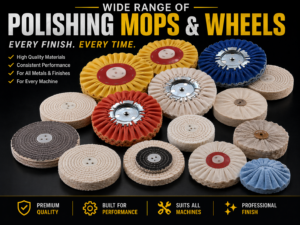
Choosing the right polishing wheel is one of the most important parts of achieving a bright, even and professional finish on metal. At Polish Up, we supply a wide range of buffing wheels and polishing wheels in Australia, including airflow wheels, sisal wheels, colour stitch wheels, white stitch wheels, swansdown wheels, cylinder wheels, dome wheels, goblet wheels and felt polishing bits.

Each wheel has a different job. Some wheels are designed for aggressive cutting and scratch removal, while others are made for refining the surface and creating a high shine. When matched with the right polishing compound and machine, these wheels help transform dull metal into a smooth, reflective finish.

How Polishing Wheels Work

Polishing wheels work by holding and applying polishing compound to the metal surface as the wheel spins. The wheel and compound work together to cut, smooth and refine the surface. Firmer wheels generally cut harder and remove scratches faster, while softer wheels are used to produce a finer finish and brighter shine.

The Main Types of Polishing Wheels at Polish Up

Polish Up offers a broad polishing wheel range for different metals, polishing stages and machine setups. Here is a practical guide to how each type of wheel works.

1. Airflow / Coolair Polishing Wheels

Airflow polishing wheels are one of the most popular wheel types for polishing larger metal surfaces. They are designed to work cooler during use, helping reduce heat build-up on the metal. This makes them especially useful when polishing aluminium tanks, alloy wheels, bullbars, stainless steel and other broad surfaces.

At Polish Up, the Airflow/Coolair range includes hard treated, coarse, medium, fine finishing and satin non-woven options, along with common sizes such as 178 mm, 200 mm and 250 mm, plus M14 adapter options. Hard treated airflow wheels are more aggressive for first-stage cutting, while untreated or finer airflow wheels are used for later finishing stages.

These wheels are a strong choice when you want good surface coverage, cooler polishing action and a high finish on non-ferrous and ferrous metals.

2. Sisal Polishing Wheels

Sisal polishing wheels are firmer and more aggressive than soft cotton polishing wheels. They are commonly used in the first stage of polishing for fast cutting, scratch removal and surface preparation.

Polish Up describes sisal wheels as ideal for aggressive cutting, initial polishing stages and surface preparation on aluminium, stainless steel, brass, copper and other metals. Sisal is often used when the surface is still dull, scratched or oxidised and needs to be levelled before finer polishing stages begin.

If you want to remove sanding lines, oxidation or heavier marks, a sisal wheel paired with the right cutting compound is usually the place to start.

3. Colour Stitch Polishing Wheels

Colour stitch wheels are stitched cotton polishing wheels that offer a good balance between control, compound retention and polishing performance. They are commonly used after the heavier cutting stage to further refine the surface.

These wheels are useful when you want a firmer polishing wheel than a loose mop, but not as aggressive as a sisal wheel. They are a practical choice for developing shine while still maintaining control over the polishing process.

4. White Stitch Polishing Wheels

White stitch polishing wheels are another stitched wheel option used for polishing and refining metal surfaces. Polish Up notes that they are suited to applications where a firmer stitched wheel is preferred for better control and compound retention.

White stitch wheels are a versatile option for many aluminium and stainless steel polishing jobs. They are often used in mid to later polishing stages where you want to clean up the finish and bring up more gloss before final colouring.

5. Swansdown Polishing Wheels

Swansdown polishing wheels are softer polishing wheels used for finer finishing work. Because they are softer, they are better suited to improving gloss and producing a brighter final appearance rather than heavy cutting.

These wheels are a strong choice when the metal is already reasonably smooth and you want to lift the clarity, lustre and mirror-like shine of the finish.

6. Cylinder, Dome and Goblet Polishing Wheels

Cylinder, dome and goblet polishing wheels are specialty shapes designed for getting into tighter areas and more detailed sections that larger wheels cannot reach easily.

On Polish Up, these mounted wheel shapes are commonly used in kits for smaller, tighter spots and detailed polishing work. They are particularly helpful on curves, corners, tubing details, recesses and awkward metal shapes where a flat wheel is less effective.

If your job includes hard-to-reach areas, these shapes can make a big difference to the final result.

7. Felt Polishing Bits and Mounted Wheels

Felt polishing bits and mounted felt wheels are commonly used for precision polishing, detail work and smaller surfaces. Felt is useful where you want a controlled contact area and a refined finish with suitable polishing compounds.

These are often chosen for detailed metal finishing, touch-up work and smaller sections where accuracy is more important than broad coverage.

How to Choose the Right Polishing Wheel

The right polishing wheel depends on the metal, the condition of the surface and the stage of polishing you are working on.

For fast cutting

Start with a sisal wheel or a hard treated airflow wheel when you need to remove oxidation, sanding marks or heavier scratches.

For refining

Use colour stitch, white stitch or medium airflow wheels to smooth the surface and improve consistency.

For final shine

Choose swansdown, fine finishing airflow wheels or softer finishing wheels when you want to maximise gloss and clarity.

For tight spots

Use cylinder, dome, goblet and felt polishing bits for smaller, awkward or detailed areas.

A Simple Polishing Wheel Workflow

  1. Prepare the surface by cleaning or sanding if needed.
  2. Cut the surface with sisal or treated airflow wheels and a cutting compound.
  3. Refine the finish with colour stitch, white stitch or medium wheels.
  4. Bring up the shine with swansdown, fine airflow or softer finishing wheels and the correct finishing compound.

Why Buy Polishing Wheels from Polish Up?

Polish Up offers a broad range of polishing wheels in popular sizes, including options for heavy cutting, cooler airflow polishing, detail work and final finishing. The live range includes wheels for aluminium, stainless steel, brass, copper and general metal polishing, plus kits and adapter options to suit a range of machines.

Whether you are polishing alloy wheels, bullbars, tanks, rails, stainless fittings, tubing or workshop projects, choosing the right wheel can make the job faster, cleaner and more effective.

Final Thoughts

Different polishing wheels work in different ways. Firmer wheels cut and prepare the surface, while softer wheels refine and finish it. By using the correct polishing wheel and compound at each stage, you can achieve a smoother, brighter and more professional result.

If you are looking for polishing wheels in Australia, explore the range at Polish Up and choose the wheel setup that best suits your metal polishing job.

How Metal Polishing Compounds Work | Polish Up Australia

How Metal Polishing Compounds Work

Learn how metal polishing compounds remove scratches, oxidation and dullness to help create a smooth, reflective finish on aluminium, stainless steel, brass, copper and more.

If you want to achieve a bright, smooth, mirror-like finish on aluminium, stainless steel, brass, copper or other metals, understanding how metal polishing compounds work is essential. Metal polishing compounds are a key part of the polishing process and, when used correctly with the right buffing wheels and polishing machines, they help remove scratches, oxidation, sanding marks and dullness from metal surfaces.

At Polish Up, we regularly help customers choose the right metal polishing compounds, buffing wheels and polishing kits for their job. Whether you are polishing alloy wheels, bullbars, tanks, stainless steel rails, truck components, marine fittings or workshop projects, the right polishing compound can make all the difference.

What Are Metal Polishing Compounds?

Metal polishing compounds are solid bars made from a combination of fine abrasives and a wax or grease-based binder. These compounds are designed to be applied to a spinning buffing wheel. Once the wheel is loaded with compound, the abrasives begin cutting and refining the surface of the metal.

What Do Metal Polishing Compounds Do?

In simple terms, a metal polishing compound helps to:

  • remove oxidation
  • reduce scratches and sanding lines
  • smooth the metal surface
  • improve reflectivity
  • create a high shine or mirror finish

How Do Metal Polishing Compounds Work?

Metal polishing compounds work by using abrasive particles to gradually level the tiny peaks and valleys on a metal surface. As the polishing wheel spins, the compound is transferred from the bar onto the buffing wheel. The wheel then carries the abrasive across the metal, cutting the surface in a controlled way.

The smoother the metal becomes, the more evenly it reflects light. This is what gives polished metal its bright, glossy appearance.

The Three Main Parts of the Process

1. The abrasive does the cutting

The abrasive inside the polishing compound removes surface imperfections. Coarser compounds remove heavier marks, oxidation and sanding scratches, while finer compounds refine the finish.

2. The binder loads onto the wheel

The waxy or greasy binder holds the abrasive together in bar form and helps it stick to the polishing wheel for even distribution during polishing.

3. The wheel applies it to the metal

A polishing compound works best when matched with the right buffing wheel, polishing speed and pressure. These factors affect how aggressively or finely the metal is polished.

The Different Types of Metal Polishing Compounds

Not all polishing compounds do the same job. Most metal polishing jobs involve working through stages, moving from more aggressive cutting to finer finishing.

Cutting compounds

Cutting compounds are used first when the metal surface has visible scratches, dullness, oxidation or sanding marks. These compounds remove defects quickly and prepare the surface for finer polishing stages.

Intermediate polishing compounds

Intermediate compounds refine the surface after the initial cut. They help remove haze and improve smoothness before the final finishing step.

Finishing or colouring compounds

Finishing compounds are used to bring out the final lustre. These compounds produce a brighter, cleaner and more reflective surface, especially on aluminium and stainless steel.

Why the Buffing Wheel Matters

The polishing compound is only one part of the polishing system. The buffing wheel also plays a major role in how the compound performs.

  • Sisal buffing wheels are firmer and more aggressive, making them ideal for heavier cutting.
  • Stitched cotton or calico wheels provide a balance between cutting and finishing.
  • Loose calico or soft polishing wheels are best for final finishing and high-shine colouring.

Using the wrong wheel with the wrong compound can reduce performance and may leave swirl marks, haze or an uneven finish.

How Metal Polishing Compounds Work on Different Metals

Aluminium polishing compounds

Aluminium is one of the most popular metals to polish because it can achieve a brilliant mirror finish. It usually responds well to a cutting stage followed by a fine finishing compound.

Stainless steel polishing compounds

Stainless steel is harder than aluminium, so it usually requires firmer buffing wheels, more pressure and compounds that can cut effectively before finishing.

Brass and copper polishing compounds

Brass and copper can polish up beautifully, but because they are softer metals, they can also mark more easily if the compound is too aggressive.

A Basic Metal Polishing Process

  1. Surface preparation – Clean the metal and, if needed, sand it to remove deeper scratches or heavy imperfections.
  2. Cutting stage – Use a cutting compound with a suitable wheel to remove oxidation, sanding lines and dullness.
  3. Refining stage – Apply a finer compound to smooth the surface and remove the marks left by the first stage.
  4. Final finishing stage – Use a finishing compound with a softer buffing wheel to create a high-gloss shine or mirror finish.

Common Problems When Using Metal Polishing Compounds

If a polishing compound is not matched correctly to the metal or buffing wheel, problems can occur.

Common issues

  • swirl marks
  • black residue
  • hazing
  • overheating
  • inconsistent shine
  • slow cutting action

Typical causes

  • using too much compound
  • using the wrong buffing wheel
  • applying too much pressure
  • using the wrong polishing speed
  • skipping polishing stages

Choosing the Right Metal Polishing Compounds

When selecting a polishing compound, consider the type of metal, how scratched or dull the surface is, whether you need cutting or final finishing, the type of buffing wheel you are using, and the machine speed in your polishing setup.

At Polish Up, we supply a wide range of metal polishing compounds, buffing wheels, polishing kits and polishing machines in Australia to help customers achieve professional results on aluminium, stainless steel and more.

Final Thoughts

Metal polishing compounds work by combining fine abrasives with a polishing wheel to cut, smooth and refine the metal surface. Coarser compounds remove scratches and oxidation, while finer compounds improve gloss and clarity.

When used in the right sequence with the correct polishing wheels, metal polishing compounds can turn dull metal into a bright, reflective finish. If you are looking for quality metal polishing compounds in Australia, Polish Up can help you choose the right products for the job.

Motorcycle polish kits

Alloy, Stainless Steel Metal Polish Called Blue Sapphire

Polish Up Blog • Metal Polishing

Blue Sapphire Metal Polish For Alloy, Stainless Steel & Detailed Metal Surfaces

If you want a finer metal polish that helps lift the shine on alloy, stainless steel, chrome and detailed metal surfaces, Blue Sapphire has earned a strong reputation for producing a brilliant finish without leaving stubborn residue behind.

Fine Metal Polishing Great For Detailed Surfaces Workshop & DIY Friendly

Why Blue Sapphire Stands Out

Blue Sapphire is a clever metal polish designed to help create a bright, refined finish on metal surfaces that need a little more detail and finesse. It is especially useful when you are polishing surfaces with tighter shapes, smaller contours or areas where a heavier metal polish may be less suitable.

It is well suited to alloy, stainless steel, chrome and decorative metal surfaces where you want a cleaner final presentation. For many users, it is a great choice when you are chasing a bright finish and want a polish that works well across more intricate areas.

If you are also looking for a complete machine-based polishing setup, you can pair your finishing process with a drill-mounted steel polishing kit from Polish Up to build a more practical polishing system from start to finish.

Best Suited For

  • Alloy polishing
  • Stainless steel brightening
  • Chrome trim and fine chrome details
  • Motorbike metal surfaces
  • Antiques and intricate shapes
  • Final detailing and refinement
  • Workshop and home polishing setups
Polish Up Tip Use a complete drill-mounted polishing setup when you want better control over cutting, polishing and final finishing stages.

What Makes Blue Sapphire A Smart Choice?

Fine Bright Finish

Designed to help bring out a brilliant shine while staying well suited to more detailed polishing work.

Great For Tight Areas

A useful option for surfaces with smaller contours, awkward corners and intricate decorative sections.

Easy Residue Removal

As it dries to a fine powder, cleanup is simpler and leftover polish can be brushed, vacuumed or blown out from creases.

Useful For Chrome Trim

A finer abrasive makes it a strong option where you want a gentler finishing polish on chrome trim.

How To Use It For Better Results

1. Start With A Clean Surface

Remove loose dirt, grease and old residue first so the polish can work directly on the metal surface.

2. Work Into Detailed Areas

Apply Blue Sapphire where a finer polish is helpful, especially around trim, contours and smaller decorative sections.

3. Allow The Residue To Dry

Once the polish dries to a fine powder, remove it with a brush, vacuum, cloth or compressed air in tighter spots.

4. Upgrade Your Process

For broader cutting and polishing stages, pair your process with a drill-mounted steel polishing kit for a more complete metal finishing setup.

What Customers Like About It

Deep Cleaning Performance

Customers praise Blue Sapphire for deep cleaning metal surfaces, especially alloy, while helping produce a stronger final shine.

High Shine Results

Review feedback highlights impressive mirrored finishes when Blue Sapphire is used as part of a good polishing process.

Works Better Than Expected

Positive feedback also points to better-than-expected results and strong recommendation value for serious polishers.

Want a complete setup for polishing steel and metal surfaces?

Explore Polish Up’s drill-mounted steel polishing kit and build a more practical polishing system for cutting, cleaning and final shine.

Polishing alumium with a bench polisher

Polishing aluminum with a bench polisher can be a straightforward process if done correctly. Here are the steps to polish aluminum using a bench polisher:

Materials and Tools:

  1. Aluminum piece to be polished
  2. Bench polisher (also known as a bench grinder with a polishing wheel attachment)
  3. Polishing compound or buffing compound
  4. Safety goggles
  5. Dust mask
  6. Work gloves
  7. Apron or protective clothing

Procedure:

1. Safety First: Before you start, make sure you are wearing safety goggles, a dust mask, and work gloves. Polishing aluminum can generate fine metal dust and debris that can be harmful if it comes into contact with your eyes or lungs.

Aluminum Polishing Supplies

2. Prepare the Bench Polisher: Ensure that the bench polisher is securely mounted to your workbench or table. Make sure it is in good working condition and the polishing wheel is clean and free of debris.

3. Select the Polishing Compound: Choose a suitable polishing compound or buffing compound for aluminum. There are various types available, such as aluminum oxide or tripoli compounds. The choice depends on the level of polishing required.

4. Apply the Compound: Turn on the bench polisher and apply a small amount of the polishing compound to the polishing wheel. Let the wheel spin for a moment to evenly distribute the compound.

5. Polishing the Aluminum:

  • Hold the aluminum piece securely but gently against the spinning polishing wheel. Make sure not to press too hard, as excessive pressure can damage the aluminum.
  • Move the aluminum piece back and forth, ensuring that you cover the entire surface evenly.
  • Keep the piece in motion and do not dwell on one spot for too long to avoid overheating and damaging the aluminum.
  • Adjust the angle and pressure as needed to achieve the desired level of shine.

6. Inspect and Repeat: Periodically stop and inspect the aluminum to check the progress. If it’s not polished to your satisfaction, continue polishing with the compound.

7. Clean the Surface: Once you’ve achieved the desired level of shine, turn off the bench polisher. Wipe off any excess polishing compound with a clean cloth or rag.

8. Final Touches: If you want an even higher level of shine, you can switch to a finer polishing compound and repeat the process.

9. Cleanup: Dispose of any used polishing compound properly and clean your bench polisher’s wheel for future use.

10. Safety Considerations: Remember to keep safety in mind throughout the process. Wear appropriate protective gear, and be cautious to avoid accidents.

Aluminum polishing can produce a brilliant shine when done correctly. However, practice and patience are essential, as achieving a mirror-like finish may take some time and effort, especially for larger or more intricate aluminum pieces.

Read More

Removing Pledge Floor Care Multi-surface Floor Finish from your wooden floor

Search for products

Back to Top
Polishup
Compare (0)